There is a national cognitive dissonance when it comes to integration. The majority of Americans claim to support integration or the idea of integrating. But what does this mean? This is not the reality that most people live. Most of us do not share life space with other races or classes. And we struggle to admit to the often large and looming inequality that results from this separation. While being physically removed from those who most suffer from the costs of separatism, it is a difficult task for many Americans to admit to the complexities of race and how different races deal with each other. The fact that race is a social construct and isn’t real is a problem but that is not for today’s discussion. Our national struggle with race relations has created privileges and experiences that vary greatly amongst United States Citizens. The sharp differences in people play a key role in their beliefs and ideologies. In this article I will break down for you why Integration led Black people into a burning house and why on the surface it seemed like a great idea but once you dig into the details , integration was a death wish for the economy of Black Americans. ” I fear I am integrating my people into a burning house”- Martin Luther King Jr in 1967.
Black Americans especially and other poor Americans pursued integration as a necessary goal during the civil rights movement because segregation systematically denied them equal opportunities, rights, and dignity. After the civil war, newly freed Blacks were given special protections by the United States government. Yes, you are reading that correct. The 13th,14th and 15th Amendments were written specifically to protect the rights of Black Americans. The 13th Amendment abolished slavery and involuntary servitude except as punishment for a crime. The 14th Amendment granted citizenship to Anyone born in the United States including the formerly enslaved and most importantly guaranteed equal protection under the law aimed at protecting Black Americans from discriminatory laws in southern slave holding states. Lastly, the 15th amendment stopped states from denying people the right to vote based on color, race or previous status of servitude (being a slave). While it is true these amendments were designed for Black Americans, many Southern states found ways to undermine the economic and social mobility of Black Americans with Jim Crow laws, poll taxes, literacy tests, and violence. This is the main reason why even after 100 years after slavery ended, civil rights was still at the forefront of the Black Agenda. Black Americans wanted access to equal education, legal and moral justice, political power and most importantly, increased economic opportunities. While there is no true time frame specifically to pinpoint when the conversation of “integration” came about, we can trace the ideas earliest roots to Frederick Douglass, the famed abolitionist who believed in full equality and integration of Black Americans into society. Many other famous Black leaders such as Martin Luther King Jr, Rosa Parks, Jackie Robinson and James Baldwin were all critical speakers and thinkers of the pro-integrationist movement. While I believe that these Blacks truly wanted Blacks to have a seat at the table economically, socially and politically and also had pure hearts and great intentions, I do believe that their ideas were very short sighted when dealing with integration and that this ideology caused more harm to Blacks than good.
When it comes to dealing with Black Americans, Integration is a weakening process. Before “integration” Black communities were forced to be somewhat self-sufficient. More than they are today if we are comparing. In theory, many Blacks like Frederick Douglass believed that integrating would allow Blacks to Assimilate into the mainstream society and from there they would reap the benefits socially and economically. In 1872 Douglass wrote “We want mixed schools not because our colored schools are inferior to white schools – not because colored instructors are inferior to white instructors, but because we want to do away with a system that exalts one class and debases another.” As he also wrote in 1848, “Let colored children be educated and grow up side by side with white children, come up friends from unsophisticated and generous childhood together, and it will require a powerful agent to convert them into enemies, and lead them to prey on each other’s rights and liberties.” While Mr. Douglass had a great heart, the domino effect of this ideology would soon be felt by the Black community. In 1954 the United States Supreme Court ruled that racial segregation in public schools was unconstitutional. This ruling was called 1954 Brown V Board. The Supreme court argued that separating Black children from others of similar age and qualifications solely because of their race generates a feeling of inferiority as to their status in the community that may affect their hearts and minds in a way unlikely ever to be undone. Sounds good right? This is where the game is played, and Blacks were duped. Instead of improving the conditions in Black businesses, schools and neighborhoods they put a band-aid over a bullet hole and never fixed the problem. Shipping Black students off to predominantly white schools (where they weren’t really wanted) created very high, almost uncontrollable social tensions. Most importantly, the Black Schools got shut down and Black teachers, principals and administrators were completely left out of the integration process. This resulted in a mass influx of Black students losing critical support from staff and created a huge burden economically on those education professionals who could not get jobs at “white” schools. It is estimated that from Brown V Board inception from 1954 to 1970 over 38 thousand Black teachers and school support staff loss their jobs and never worked in education ever again. There were no specific provisions that protected employees of the school, the conversation was only held around the students. This is why I believe many of the pro-integrationist ideas were very very very short sighted.
White ice is colder? This is a phenomenon in the Black community that we have always struggled with. The saying comes from Dr Claud Anderson who witnessed a Black man buy ice from a white owned store when he could have bought the same ice from a black owned store across the street. When asked why he bought the ice, the black man said, “because I don’t like the Ice that the black store sells” …. HUH? How can ice be any different? And this is exactly what happens to Black Americans business when dealing with Integration. On December 1st 1955, Rosa Parks, a Black woman refused to give up her seat to a White man on a Montgomery bus and this resulted in the Montgomery bus boycott which resulted in the desegregation of the bus system. Once again, in theory this sounds amazing. Black people finally get to ride on the front of WHITE busses. But what about the Black busses? During segregation, bus routes in Southern Metropolitan Cities that brought workers to the city’s major employers did not extend into Black neighborhoods. That often-meant long walks to the main routes or trolley lines, until Safe Bus. The countries first Black-owned transportation company was formed in the mid-1920s to service the community, and it continued operating until 1972 when it became part of the Winston Salem Transit Authority. Blacks didn’t have to sit at the back of these buses, they didn’t have to worry about facing discrimination at the bus or at the bus stop. The Safe Bus Company owned over 500 buses in the south that were providing low costing, effective transportation for Black Americans. When the Black leaders decided that they wanted to sit on the front of WHITE buses, instead of just using the 500 plus Safe Buses, Safe Bus went out of business. Safe Bus formed out of the practice of segregation and eventually ended due to integration. Now Forced to cover the entire city, including non-productive routes, an increased lack of equipment, competition from rising automobile ownership, and a majority population not as willing to ride Black-operated buses meant that this bus line could operate no longer. This meant that the Black mechanics, the Black drivers, the Black electricians were all put out of business. Safe Bus was the largest and most successful Black Bus line. In 1965 there were about 35 city fleet busses that serviced Black people and Black communities. Today in 2025, there are zero. Thanks to integration.
This same phenomenon can be found in so many different sectors. In the 20th century every single major metropolitan area had 2 Black owned theatre companies. There was a Lincoln and Lafayette theatre in every Black section of the United States. These theatres were major hubs for Black entertainment, arts and media. The ability to have venues and platforms that represent your community and culture have been stripped and forgotten about. When it comes to the film industry, representation matters. Black-owned cinemas and media play a crucial role in creating a platform for diverse voices and stories to be shared. These cinemas not only showcased films made by Black filmmakers but also create spaces for communities to come together and celebrate Black culture. Unfortunately, due to integration and its practices the last Lincoln Theatre closed in 1983, and the last Lafayette theatre closed in 1990.
Jackie Robinson, a black man made his major league baseball debut in 1947. Officially becoming the first Black player to break the color barrier. This was a major significant mark in race relations, so many people thought. Jackie Robinson, a Black guy finally gets to play with Whites. But nobody stopped to think about where Jackie came from… The Negro leagues.
The Negro Leagues was a collection of professional baseball teams for Black Americans, that was primarily active from 1920 to the late 1940s. They arose due to segregation in Major League Baseball (MLB), which barred Black players. While the leagues experienced their peak in the 1920s and 1930s, the integration of MLB in 1947 led to their decline, as Black players were increasingly recruited by MLB teams. The last Negro League teams folded in the early 1960s. WHAT IF, when the time came for baseball integration, the major league white teams MERGEDwith the Negro Leagues? Instead of picking and choosing a select handful of early players who had the courage to deal with racism and prejudice they could have perhaps had a handful of Negro League teams in the 1940s could have become full membered MLB teams, and the rest of the Negro League players put into a supplemental draft for all teams. Four Negro League teams from four markets untouched by MLB at the time—the Baltimore Elite Giants, the Newark Eagles, the Indianapolis Clowns, and the Kansas City Monarchs—could have become full-fledged MLB members, and more players would have had a shot at major league play. Instead of this tactic, very few were brought in from the Negro Leagues which on the surface doesn’t seem like a big deal. But if they were taking the big named players like Jackie Robinson and Satchel Paige from the Negro Leagues, the attraction to the negro league teams is diminished and within decades, they won’t be around anymore. And this is exactly what happened. The last Negro League team disbanded in 1960.
Lastly, the biggest blow when dealing with Integration was what it did to the Black housing market. The Burden of integration has always been felt by Black people. In the early 1930s the United States Government and Bank systems systematically refused loans or insurance to Black families in certain neighborhoods, marking them as “high risk” simply due to race. This made it nearly impossible for many Black families to buy homes or build wealth. These practices were called Redlining and Restrictive Covenants. Due to this blatant and overt racism, the Fair Housing Act of 1968 was created. This act prohibited discrimination in housing based on color, race, sex, national origin or disability. It was created to “ensure equal access to housing for all.” On the surface the language of this act sounds like it was a perfect solution to the housing inequality that Blacks faced. But once again, Blacks face the burden of integration. White flight and disinvestment led to declining property values. What legislators forget is that they can’t legislate hate or human behavior. When Blacks started moving into predominantly White neighborhoods, these white neighbors fled and took the economy with them. The Whites who did stay, also tended not to be the friendliest. Many Black families who were granted access to move into these neighborhoods were not met with welcome arms and pretty much defeated the purpose of Blacks moving into those areas. Think about the saying “white ice is colder?” Efforts to integrate often meant displacing Black families or dismantling thriving Black neighborhoods (like those in urban renewal projects), Community institutions, businesses, and support networks were lost. This resulted in an unequal burden that Blacks faced of bearing the emotional, social and financial costs that moving in and out of these neighborhoods created. WHAT IF, instead of outlawing housing discrimination by race, religion, national origin, the federal government outlawed specific practices like redlining and restrictive covenants, while simultaneously requiring all local jurisdictions to provide housing for all persons at all income levels? Mid 20th-century American suburbs would likely have seen an increase in working-class and low-income housing, and in result would have been way diverse far earlier than it became.
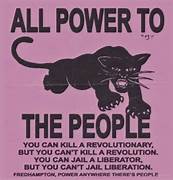
Black Americans need to learn the importance of owning and controlling. We own nothing, which results in us controlling nothing. Integration was a mass psychological need by Blacks to feel whole and accepted by the larger white society. Black Americans struggle with a sense of belonging. It is true at one point we had what we needed in our communities to be somewhat self-sufficient. But with that being said many of us still have a need to be accepted by the larger society. Not only have Blacks (including myself) put an emphasis on working for and being a part of institutions not ran and controlled by us, but Blacks also face the challenge of starting, supporting, and maintaining Black businesses. If you go to any major city, especially DETROIT, MICHIGAN. You will see in these predominantly Black communities, the local businesses are not Black owned. We are the consumer class, and this is not by accident. Most of the convenience stores, beauty, hair and nail shops are, in fact, owned by Arabs and Asians, some of whom have responded to customers with violence in retaliation to toxic behaviors towards them which in some neighborhoods are the norm. For Black Americans after being frozen out of many parts of society and still facing the hardship and economic consequences of slavery and Jim Crow, the idea of wanting to be included and assimilate into the larger society isn’t crazy. It is very understandable. With that being said, we must understand that these actions and ideologies have been at the expense of the Black community as a whole. The issue is not segregation or integration. In order to power the people, we must work on Congregation, which means uniting a group of people who share the same common values, beliefs and humanist ideals. Black Americans have a long way to go and first we must revitalize our ideologies.

Leave a Reply